Introduction: Redefining Fatherhood in the Age of AI
Introduction: Redefining Fatherhood in the Age of AI
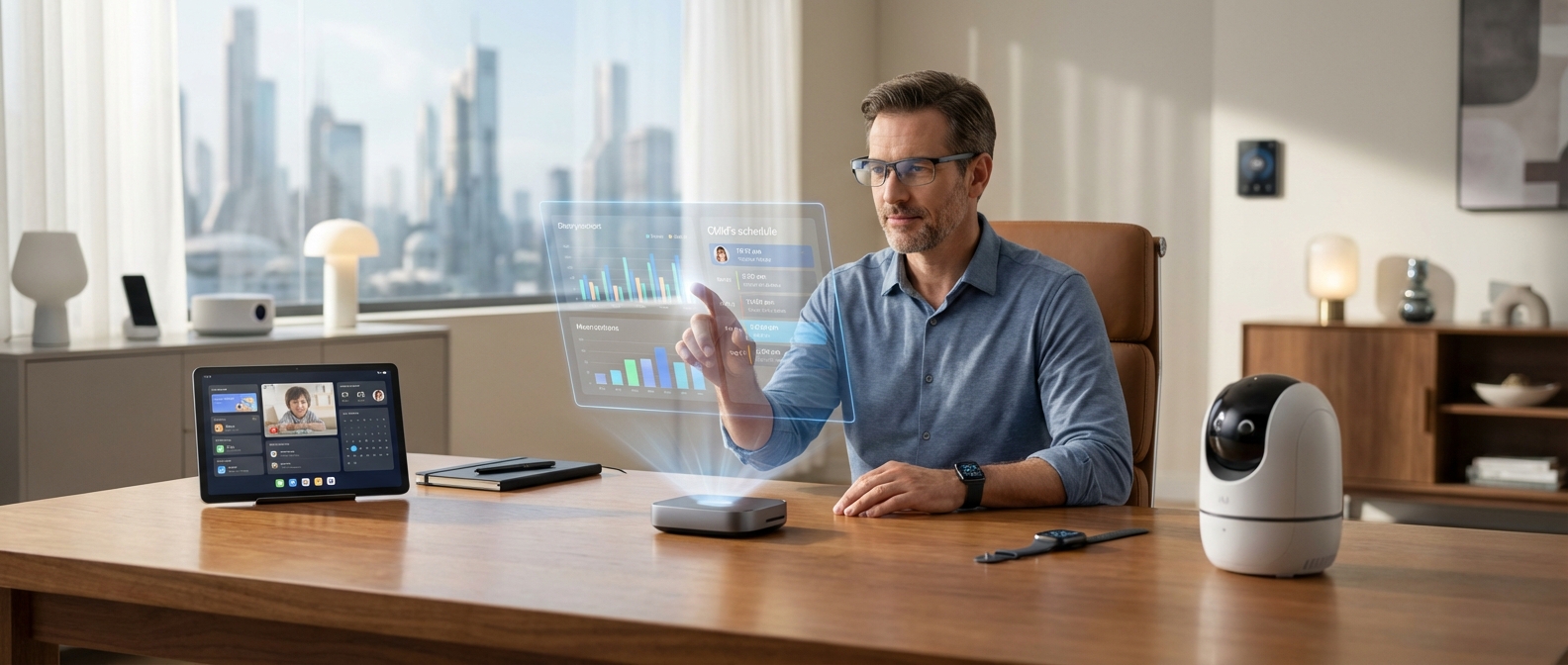
The mental load of modern fatherhood is an invisible, relentless weight. It isn't just the physical act of parenting; it is the constant background processing of schedule management, supply logistics, and developmental milestones. Smart dad technology is no longer about distraction or escapism; it is the ultimate tool for parenting efficiency, designed to automate the mundane so you can be physically and emotionally present for the moments that matter.
We are moving past the era of disjointed gadgets. Being a tech-savvy dad in 2026 means deploying a cohesive "tech stack" that operates silently in the background. Unlike the fragmented landscape of 2024, today's ecosystem is defined by proactive intelligence rather than reactive commands.
Why 2026 is the Turning Point for Dad Tech
If you are still operating with the tools of two years ago, you are working too hard. The landscape has shifted fundamentally in three key areas:
- Ubiquitous AI: Artificial Intelligence has moved from a novelty chatbot to an ambient assistant. Your home doesn't just wait for commands; it anticipates needs, adjusting environments and schedules based on family patterns.
- The Matter Protocol Standard: The days of "walled gardens" are effectively over. Compatibility issues that plagued early adopters have largely vanished, allowing for a seamless mix-and-match approach to hardware.
- Invisible Health Monitoring: Wearables now provide actionable insights into family wellness without being intrusive, shifting from simple tracking to predictive health management.
This guide delivers on a single promise: we will help you build the ultimate Smart Dad Tech Stack. We are stripping away the hype to focus on 45+ Modern Dad Gadgets That Actually Save Time & Sanity (2026 Guide). Whether you are looking to optimize your home network or automate your grocery runs, this is your blueprint for a smarter, more connected fatherhood.
Ready to lay the foundation? Start by reviewing our Smart Home Automation Purchase Guide: Building the Ultimate Ecosystem in 2026.
The Smart Home Command Center: Automation for Peace of Mind
The Smart Home Command Center: Automation for Peace of Mind
A true smart home command center isn't about collecting gadgets; it's about unifying them into a seamless workflow that operates autonomously. By 2026, the most effective systems leverage the Matter protocol to ensure interoperability, allowing dads to automate security, energy management, and daily routines without constant tinkering. This is the ultimate "set it and forget it" strategy for reclaiming family time and mental bandwidth.
The End of Walled Gardens: Matter Protocol 2026
For years, dads were forced to choose sides: Apple, Amazon, or Google. In 2026, those barriers have largely collapsed. The maturity of the Matter protocol 2026 ensures that a motion sensor bought on sale works natively with your existing hub, regardless of the brand. This standardization allows you to focus on building a robust smart home ecosystem rather than worrying about compatibility charts.
The goal is an invisible infrastructure. If you are constantly opening an app to turn on lights, you haven't built a smart home; you've built a remote-controlled home. True home automation anticipates needs based on time, presence, and environmental triggers.
For those just starting this journey, defining your primary platform is still necessary for the user interface, even if the devices underneath are universal. See our Smart Home Automation Purchase Guide for a deep dive on selecting your foundation.
Core Workflows: Set It and Forget It
Efficiency is the modern dad's currency. Instead of buying devices in isolation, design workflows that solve specific friction points in your day.
The "Secure Perimeter" Workflow Peace of mind is paramount. Configure your command center to execute a "Night Mode" automatically at 10:00 PM or when the last person leaves the living room.
- Action: Smart locks engage immediately.
- Action: Garage doors verify closure; if open, they close and send a push notification.
- Action: Exterior cameras arm with increased sensitivity.
- Action: Interior motion sensors on the ground floor activate.
The "Morning Rush" Protocol Mornings are chaotic. Automate the environment to assist the family.
- Trigger: Motion detected in the kitchen between 6:00 AM and 7:00 AM.
- Response: Kitchen lights fade up to 50% (warm white).
- Response: The thermostat adjusts from "Sleep" to "Comfort" mode. For specific recommendations, check our review of the Best Value Smart Thermostats of 2026.
- Response: The smart speaker reads the day's weather and calendar summary.
Choosing Your Brain: Hub Comparison
While devices talk via Matter, you still need a central interface (the "brain") to process the logic. Here is how the major players stack up for the 2026 power user.
| Ecosystem Hub | Best For | 2026 Matter Support | Privacy Rating | Learning Curve |
|---|---|---|---|---|
| Home Assistant (Green/Yellow) | The "Tinkerer Dad" seeking total local control and zero cloud reliance. | Native / Advanced | High | Steep |
| Apple Home (HomeKit) | Families deep in the iOS ecosystem prioritizing security and ease of use. | Native | High | Low |
| Google Home | Households that rely heavily on AI assistance and data integration. | Native | Medium | Low |
| Amazon Alexa | families wanting maximum voice control compatibility and aggressive pricing. | Native | Low/Medium | Low |
Undecided on the voice assistant aspect? Read our breakdown: Google Home vs. Alexa: Which Assistant Rules the Dad Life in 2026?
Advanced Tactics for the Tech-Savvy Dad
Once the basics are stable, introduce high-leverage automation that protects your home and wallet.
- Leak Defense: Install water sensors near the washing machine and water heater. Link these to a smart main water shutoff valve. If a leak is detected, the water cuts instantly, preventing thousands in damages.
- The Dinner Broadcast: Stop shouting up the stairs. Use an NFC tag glued to the kitchen counter. Tapping your phone on it triggers a "Dinner is Ready" announcement across all best smart home speakers in the kids' rooms.
- Occupancy Simulation: When the house is in "Vacation Mode," automation should toggle lights in random patterns to simulate presence, deterring potential intruders more effectively than a static timer.
By focusing on these workflows, you transform your home from a collection of gadgets into a cohesive partner in parenting.
Next-Gen Security & Baby Monitoring
Next-Gen Security & Baby Monitoring
Family safety tech has shifted from reactive recording to predictive analysis. In 2026, a security system that merely records video is obsolete; the standard is now context-aware intelligence that processes data locally to protect privacy while maximizing response speed.
AI-Driven Perimeter Defense
Modern AI security cameras function less like passive observers and more like digital sentries. Utilizing advanced edge computing, these devices distinguish between routine events and genuine anomalies with near-perfect accuracy. A stray dog crossing the lawn logs a "Nature Event" without notifying you. A delivery driver dropping a package triggers a "Service Alert." However, an unrecognized individual loitering near the garage at 2:00 AM triggers a "Threat Sequence," instantly notifying you and potentially activating floodlights.
This intelligent filtering reduces notification fatigue, ensuring you only check your phone when it matters. Integrating these cameras is a critical step in creating a cohesive environment, a concept we explore deeply in our Smart Home Automation Purchase Guide: Building the Ultimate Ecosystem in 2026.
Comparison: Legacy Systems vs. 2026 AI Standards
| Feature | Legacy Systems (2020-2024) | 2026 AI Standard |
|---|---|---|
| Detection Trigger | Pixel changes or basic heat signatures. | Object classification & behavioral analysis. |
| False Positives | High (triggered by leaves, shadows, bugs). | Near Zero (filters environmental noise). |
| Processing | Cloud-dependent (high latency). | Edge AI (instant, local processing). |
| Privacy | Raw footage often sent to the cloud. | Metadata only; video encrypted locally. |
Contactless Health Monitoring for Infants
The nursery has seen perhaps the most significant leap in technology. The era of wearable socks and clip-on buttons is ending. The 2026 smart baby monitor utilizes millimeter-wave radar (similar to LiDAR but for micro-movements) to track infant health metrics without physical contact.
These sensors detect the rise and fall of a baby's chest through swaddles and sleep sacks. The system aggregates this data to analyze sleep architecture, distinguishing between REM cycles and deep sleep. This granular data helps parents understand why a wake-up occurred—whether it was a noise event, temperature spike, or natural sleep cycle transition.
Key Features of Radar-Based Monitoring:
- Breathing Rate Analytics: Real-time RPM (respirations per minute) alerts without false alarms caused by a slipped sock.
- Predictive Wake Windows: Algorithms suggest the optimal time to put the baby down based on previous sleep quality.
- Environmental Correlation: Maps room temperature and humidity against sleep depth.
For more tools that streamline parenting duties, check our curated list of 45+ Modern Dad Gadgets That Actually Save Time & Sanity (2026 Guide).
Energy Management & Automated Chores
Energy Management & Automated Chores
By integrating advanced energy efficiency protocols and fully autonomous cleaning hardware, the modern smart home reclaims approximately 180 hours of free time annually. This section details how to leverage automation to generate a surplus of two resources every dad needs: cash and time.
The Financial Case for Intelligence
In 2026, a smart thermostat is no longer just a convenience; it is a high-yield financial asset. Modern units utilize predictive AI to analyze local utility rates and weather patterns, pre-cooling or pre-heating your home during off-peak pricing windows. This "load shifting" drastically reduces monthly overhead without impacting family comfort.
For specific hardware recommendations that balance performance with price, consult our review of the 5 Best Value Smart Thermostats of 2026: Save Money Without Sacrificing Tech.
Beyond climate control, smart plugs act as the gatekeepers of your electric bill. They eliminate "vampire draw"—the standby power consumed by game consoles, soundbars, and coffee makers—which can account for up to 10% of household energy usage.
Estimated First-Year ROI for Smart Energy Devices:
| Device Category | Avg. Unit Cost | Est. Annual Savings | ROI Break-Even Point |
|---|---|---|---|
| AI Smart Thermostat | $180 - $250 | $145 - $190 | 14–18 Months |
| Smart Plug Network (10 units) | $80 - $120 | $60 - $90 | 12–16 Months |
| Smart Water Monitor | $200 - $300 | $40 (plus leak prevention) | 5 Years (Immediate if leak detected) |
True Autonomy: The Plumbed Robot Vacuum Mop
For years, the promise of the robot vacuum mop was hampered by a fatal flaw: human intervention. You still had to refill clean water and dump dirty sewage tanks daily.
That friction point is gone. The gold standard for 2026 is the "install-and-ignore" cleaning station. These base stations connect directly to your home’s plumbing (intake and drainage), similar to a dishwasher or washing machine.
- Self-Refilling: The dock pulls fresh water automatically.
- Self-Draining: Dirty mop water flushes directly into your home's waste line.
- Self-Cleaning: The mop pads are washed and dried with hot air after every run to prevent mold.
This shift allows you to schedule cleaning runs while the family sleeps, ensuring you wake up to pristine floors without lifting a finger. If you are just starting to piece together your network, review our Smart Home Automation Purchase Guide: Building the Ultimate Ecosystem in 2026 to ensure your cleaning bots communicate effectively with your central hub.
Implementation Strategy:
- Location: Install the dock in a laundry room, mudroom, or under a bathroom vanity where water lines are accessible.
- Scheduling: Program the vacuum to run immediately after the kids leave for school to clear breakfast crumbs, and the mop to run at 2:00 AM.
- Zoning: Use mapping features to designate "no-mop zones" around carpeted play areas.
The goal is simple: spend less time cleaning, and more time playing.
The AI Co-Parent: Leveraging Personal Assistants
The AI Co-Parent: Leveraging Personal Assistants
The AI parenting assistant of 2026 is no longer a glorified kitchen timer; it is a proactive logic engine capable of managing complex family logistics through Large Language Models (LLMs). Unlike the rigid voice assistants of the early 2020s, today's personal agents utilize generative AI to understand context, predict scheduling conflicts, and synthesize vast amounts of information into actionable parenting strategies.
Beyond Voice Commands: The Era of Reasoning Agents
For a decade, dads relied on basic triggers: "Turn on the lights" or "Set a reminder." That era is over. The integration of advanced LLMs into home ecosystems means your assistant now possesses reasoning capabilities.
Generative AI for dads acts as a Chief of Staff. You don't just ask it to add an event to the calendar; you feed it the school newsletter PDF, the soccer schedule, and your work itinerary. The agent then identifies conflicts, suggests carpool routes, and drafts emails to coaches regarding absences. This shift reduces the mental load significantly, allowing you to focus on engagement rather than administration.
Strategic Implementation for Family Scheduling
To truly leverage this technology, you must treat your AI agent as a partner, not a search engine.
- Contextual Calendar Management: Instead of manual entry, upload images of flyers or forward emails. Instruct the AI: "Cross-reference this birthday party invite with the boys' hockey schedule and my travel dates. If I'm free, add it and remind me to buy a gift for a 7-year-old interested in robotics two days prior."
- Nutritional Logistics: Connect your agent to your grocery inventory. Ask it to generate a meal plan for the week that accounts for your partner's gluten sensitivity and your toddler's refusal to eat anything green, then auto-fill your cart.
- Educational Reinforcement: Use the agent to explain Common Core math concepts to you so you can effectively help your child, or have it generate practice quizzes based on the specific curriculum uploaded from the school portal.
Comparing Top AI Agents for Families (2026)
Not all agents handle family scheduling and data privacy equally. Choose the ecosystem that aligns with your hardware and privacy comfort levels.
| AI Agent | Best For | Key Family Feature | 2026 Privacy Rating |
|---|---|---|---|
| Apple Intelligence (Siri +) | Ecosystem Integration | On-device processing for calendar/messages; highly secure for personal family data. | High |
| Google Gemini Advanced | Logistics & Data | Deep integration with Google Workspace (Docs, Sheets, Calendar) for managing complex schedules. | Medium |
| OpenAI (Custom GPTs) | Reasoning & Creativity | Best for generating bedtime stories, travel itineraries, and creative problem solving. | Medium-Low |
| Home Assistant (Local LLM) | Total Control | Runs locally on your server. Zero data leaves the house. Requires technical setup. | Ultra-High |
Hardware Integration
Software needs a vessel. The effectiveness of your AI co-parent relies heavily on the microphones and speakers capturing your requests. An agent is useless if it cannot hear you over the chaos of breakfast. For a breakdown of the hardware that best supports these advanced agents, read our guide on The Best Smart Home Speakers of 2026: Ranked & Reviewed for Families.
The "Briefing" Protocol
Adopt a morning briefing routine. While brewing coffee, trigger a custom routine where your AI summarizes:
- Logistics: Who needs to be where and when.
- Weather: Clothing recommendations for the kids.
- Reminders: "It is trash day," or "Sign the permission slip."
- Meal Prep: What needs to be defrosted for dinner.
By offloading the memory tasks to an AI parenting assistant, you reclaim the bandwidth needed for the emotional and physical demands of fatherhood.
Automating the Family Calendar
Automating the Family Calendar
Automating the family calendar means leveraging AI to parse unstructured data—like school newsletters, PDF sports schedules, and appointment confirmation emails—into actionable digital events without manual data entry. By forwarding communications to an intelligent agent, you transform static text into a dynamic shared family calendar that updates in real-time, effectively eliminating the "I didn't know we had practice" excuse.
The Death of Manual Entry
Stop acting as the household data entry clerk. In 2026, automated scheduling relies on the visual and text processing capabilities of modern AI assistants. The goal is a "zero-touch" workflow where information flows from the source (the school, the coach, the doctor) directly to your family's wall display and smartphones.
When you receive a soccer schedule as a photo or a cluttered PDF, advanced AI integration allows you to simply "share" that file with your calendar agent. The AI extracts dates, times, and locations, identifies conflicts, and creates the events.
Choosing Your Ecosystem
To achieve seamless automation, you must select the right platform. The efficiency of your calendar depends heavily on the voice assistant and smart home ecosystem you have built.
| Feature | Google Ecosystem (Gemini) | Apple Ecosystem (Apple Intelligence) | Dedicated Family Apps (Cozi/Skylight) |
|---|---|---|---|
| Input Method | Gmail auto-parse & visual scan | iMessage context & Siri screen awareness | Manual entry or strict email forwarding |
| Conflict Detection | High: Cross-references maps & traffic | Medium: Checks local calendar availability | Low: Basic overlap alerts |
| Hardware Sync | Nest Hub Max & Android Widgets | StandBy Mode & HomePod | Proprietary wall displays |
| Best For | Data-heavy families & Android users | Privacy-focused iPhone households | Families wanting a physical, distinct screen |
For a deeper dive into which ecosystem handles voice queries and scheduling best, read our analysis on Google Home vs. Alexa: Which Assistant Rules the Dad Life in 2026?.
The "Auto-Forward" Strategy
The most robust strategy for 2026 involves creating a dedicated funnel for information. Do not let school emails get buried in your personal work inbox.
- Create a Family Alias: Set up a dedicated email address (e.g.,
calendar@smithfamily.com) that auto-forwards to your primary calendar account. - Utilize AI Agents: Services like Reclaim.ai or Motion have evolved family tiers. Connect these to the family alias. They will detect "appointment" language and block that time on the shared family calendar automatically.
- The "Screenshot" Shortcut: When a coach texts a schedule update, take a screenshot. Share it immediately to your AI assistant (ChatGPT, Gemini, or Copilot) with the prompt: "Create .ics file events for these dates and add to Family Calendar."
- Sunday Night Sync: Configure your smart speaker to announce the week's schedule every Sunday at 7:00 PM. This forces a mental synchronization for the whole family, ensuring the digital data matches reality.
By removing the friction of data entry, you ensure the calendar is actually used. A calendar that is only 80% accurate is 100% useless; automation bridges that gap.
Meal Planning and Grocery Logistics
Meal Planning and Grocery Logistics
Modern kitchen management relies on a seamless loop between hardware sensors and predictive algorithms. A smart fridge in 2026 acts as the central inventory hub, utilizing internal computer vision and RFID tagging to track stock levels in real-time, while connected AI applications generate nutritional plans based on expiring ingredients and family dietary restrictions. This ecosystem effectively removes the cognitive load of "what's for dinner" from the daily parenting grind.
Intelligent Inventory Management
The days of manually checking the crisper drawer are over. Current flagship models from Samsung and LG utilize advanced internal cameras that scan items every time the door closes. These devices identify SKUs, estimate produce freshness, and tag expiration dates automatically.
When the milk falls below a defined weight threshold, the system flags it. This isn't just about convenience; it is about data. Your kitchen ecosystem now knows exactly what you have. For a broader look at essential gear, consult The Ultimate Dad Tech Buying Guide (2026) to see how these appliances fit into a larger ecosystem.
AI-Driven Menu Generation
Once your inventory is digitized, AI meal planning takes over. Standalone apps like Paprika 5.0 or manufacturer-native hubs (like Samsung Food+) analyze your stock against thousands of recipes. The software prioritizes ingredients that are approaching their expiration dates, drastically reducing food waste.
If your profile notes a peanut allergy or a keto preference, the AI filters out incompatible options instantly. You receive a push notification at 4:00 PM: "Make Lemon Herb Chicken. You have all ingredients. Thawing time: 0 minutes." It solves the decision fatigue before you even leave work.
End-to-End Grocery Delivery Automation
The final piece of the puzzle is grocery delivery automation. When your smart fridge detects low staples, it doesn't just alert you; it populates a digital cart. By integrating with services like Amazon Fresh or Walmart InHome, the system can auto-replenish essentials without your input.
You simply review the "suggested cart" once a week, approve the AI's choices, and schedule the drop-off. This level of integration is a key component of a robust ecosystem, as detailed in our Smart Home Automation Purchase Guide: Building the Ultimate Ecosystem in 2026.
Comparison: Manual vs. AI-Assisted Kitchens
| Feature | Manual Kitchen Management | Smart Hybrid Setup (2026) |
|---|---|---|
| Inventory Tracking | Visual checks, mental notes, paper lists. | Smart fridge cameras & weight sensors. |
| Meal Planning | Based on cravings or memory; high decision fatigue. | AI meal planning based on inventory & nutrition goals. |
| Waste Management | High; produce often spoils unnoticed. | Low; alerts sent for expiring items. |
| Restocking | Manual shopping trips or manual app entry. | Grocery delivery automation (auto-fill carts). |
| Time Cost | 3-5 hours/week (planning + shopping). | < 30 minutes/week (cart review). |
Stop trading your free time for grocery runs. Leverage these tools to reclaim your weekends.
Wearables & Health: The 'Fit Dad' Protocol
Wearables & Health: The 'Fit Dad' Protocol
The "Dad Bod" isn't a badge of honor; it is a metabolic warning sign. In 2026, the modern father doesn't train for a beach body—he trains for longevity and the stamina to chase a toddler for three hours without winding himself. The most effective dad fitness tech has evolved beyond simple step counting. It now prioritizes recovery metrics, Heart Rate Variability (HRV), and stress management to ensure you aren't just surviving parenthood, but physically dominating it.
Moving Beyond Steps: Recovery is the New KPI
Forget hitting 10,000 steps if you slept four hours and your stress levels are redlining. You cannot manage what you do not measure. Health tracking wearables in 2026 focus on "Readiness" or "Body Battery" scores. These algorithms analyze your autonomic nervous system to dictate your daily capacity.
If your wearable indicates low recovery, a high-intensity interval workout might actually be detrimental to your testosterone levels and immune system. Instead, the data suggests a walk or early bedtime. This approach ensures you maintain the energy reserves required for effective parenting, rather than burning out by noon.
The Rise of Smart Rings
While smartwatches remain functional, smart rings have cornered the market for dads who want data without distraction. They offer clinical-grade sleep tracking without the blue light of a screen or the buzzing of notifications during bedtime stories.
Below is a comparison of the top recovery tools for fathers in 2026:
| Device | Form Factor | Battery Life | Best For | Key "Dad Feature" |
|---|---|---|---|---|
| Oura Ring Gen 4 | Ring | 7 Days | Sleep & Illness Detection | Unobtrusive design; won't scratch kids while playing. |
| Garmin Fenix 8 | Watch | 18+ Days | Outdoor Activities & GPS | "Body Battery" energy monitoring. |
| Whoop 5.0 | Strap | 5 Days | Pure Recovery Data | Screen-free; focuses entirely on strain vs. recovery. |
| Apple Watch Ultra 3 | Watch | 3 Days | Integration & Safety | Crash detection and cellular connectivity for emergencies. |
The Protocol: Optimizing the Dad Engine
Owning the gear is useless without a strategy. Implement these three protocols to leverage your tech:
- Track HRV, Not Just BPM: Heart Rate Variability is your dashboard for stress. A plummeting HRV suggests your nervous system is overloaded—likely from work stress or a sick infant. When this drops, prioritize sleep over the gym.
- Zone 2 Cardio: Use your tracker to stay in "Zone 2" (60-70% of max heart rate). This builds the aerobic base necessary for long days at the park without the fatigue that comes from high-intensity training.
- Sleep Consistency: Set a "reverse alarm clock" on your device. It reminds you when to start winding down, not just when to wake up.
For a wider look at how technology can streamline your parenting life beyond just health, review our breakdown of 45+ Modern Dad Gadgets That Actually Save Time & Sanity (2026 Guide).
Your health is the ultimate productivity hack. Use these tools to ensure you are the strongest, most energetic version of yourself for your family.
Smart Rings and Watches for Longevity
Smart Rings and Watches for Longevity
For dads prioritizing longevity in 2026, the choice between smart rings and rugged watches hinges on comfort versus data density. Smart rings like the Oura Gen 4 offer unobtrusive, clinical-grade sleep tracking and illness detection. Conversely, rugged watches like the Apple Watch Ultra 3 provide comprehensive cardiovascular insights, including real-time blood pressure monitoring, making them superior for active training and holistic health management.
The State of Wearable Technology in 2026
The landscape of wearable technology has shifted from simple step counting to predictive health analytics. We have moved beyond reactive medicine. The devices on your wrist or finger now act as early warning systems for chronic conditions. While smart home devices automate your environment (see our 45+ Modern Dad Gadgets That Actually Save Time & Sanity (2026 Guide) for more), wearables automate your health data collection.
Smart Rings: The Invisible Health Guardian
If you hate wearing a watch to bed, the smart ring remains the king of recovery. In 2026, leaders like Oura and the Samsung Galaxy Ring 2 have perfected sleep tracking accuracy that rivals polysomnography.
- Sleep Apnea Detection: New FDA-cleared sensors in 2026 models continuously monitor blood oxygen variations to detect apnea events without the need for a bulky CPAP mask during diagnosis.
- Illness Prediction: By analyzing skin temperature trends and HRV (Heart Rate Variability), these rings often flag viral infections 24 hours before symptoms appear.
- Form Factor: Titanium shells have become thinner, making them virtually indestructible during weightlifting or DIY projects.
Rugged Watches: The Active Physiology Lab
For the dad who wants a dashboard for his body, the rugged watch category—dominated by the Garmin Fenix 9 and Apple Watch Ultra 3—has introduced features previously restricted to doctor's offices.
- Cuff-less Blood Pressure: This is the breakout feature of 2026. Using advanced optical sensors and pulse transit time, these watches monitor BP trends, alerting you to hypertension risks caused by stress or diet.
- Advanced Stress Management: Garmin’s "Body Battery" has evolved. It now correlates your calendar events with physiological stress spikes, telling you specifically which meetings are killing you.
- Durability: These devices are built for the apocalypse. Multi-band GPS and solar charging are now standard, ensuring you stay connected off-grid.
Comparison: Ring vs. Watch for the 2026 Dad
| Feature | Smart Ring (Oura / Samsung) | Rugged Watch (Garmin / Apple Ultra) |
|---|---|---|
| Primary Focus | Recovery, Sleep, & Simplicity | Performance, Training, & Real-time Vitals |
| Battery Life | 7–9 Days | 3–30 Days (depending on Solar/Model) |
| Blood Pressure | Experimental / Not Available | Active Monitoring (Optical Sensors) |
| Sleep Apnea | Clinical Grade Detection | Good Detection (Battery drain risk) |
| User Interface | App-Dependent (Screenless) | High-Res AMOLED / MicroLED |
| Comfort | 10/10 (24/7 Wearability) | 6/10 (Bulky for sleep) |
| Best For | The "Set and Forget" Dad | The Data-Driven Athlete |
The Verdict: If your primary goal is optimizing deep sleep and managing baseline health without distraction, get the ring. If you need real-time blood pressure data and active stress management tools during high-pressure workdays, the rugged watch is non-negotiable. Many dads in our community are now opting for both: a ring for the night and a watch for the day, syncing data into a unified health dashboard like Apple Health or Google Fit.
Bonding Through Tech: Edutainment & Gaming
The narrative that all screens are toxic is outdated. Active screen time—defined by interaction, problem-solving, and creation—serves as a high-bandwidth bridge for father-child bonding, distinguishing itself sharply from the zombie-like state of passive scrolling. In 2026, the most effective dad-tech strategy isn't prohibition; it is participation, turning devices into digital playgrounds where relationships are built rather than neglected.
The Shift: Active vs. Passive Engagement
To master educational technology and gaming, you must first audit how your family interacts with screens. Passive consumption isolates; active engagement connects.
Use this framework to evaluate your current tech diet:
| Category | Passive Consumption (Avoid) | Active Bonding (Embrace) |
|---|---|---|
| Gaming | Child playing alone while you scroll your phone. | Co-op dad and kid gaming where communication is required to win. |
| Video | Endless algorithm-fed YouTube shorts. | Watching a documentary together and pausing to discuss the concepts. |
| Toys | Noisy, flashing toys that play at the child. | STEM toys that require code, assembly, or logic to function. |
| Creation | Consuming graphics or art. | Using AI tools or tablets to design characters or build 3D models together. |
Co-Op Gaming: The Modern Catch
Gaming is the new backyard catch. It provides a shared objective and a neutral ground for communication. When you engage in dad and kid gaming, you model emotional regulation, strategic thinking, and teamwork.
Don't just hand over the controller. Play alongside them.
- Collaborative Worlds: Opt for sandbox games (like the latest iterations of Minecraft or Roblox) where you build persistent worlds together. This creates a shared project you can return to weekly.
- Puzzle Platformers: Choose games that require two players to solve physics-based puzzles. These force you to talk through problems: "I'll hold the lever, you run through the door."
- Immersive Audio: The experience matters. Poor audio leads to disengagement. For a truly immersive setup, utilize high-fidelity audio. Check our review of The Best Smart Home Speakers of 2026: Ranked & Reviewed for Families to find a setup that handles gaming dynamic range without overwhelming the living room.
STEM Toys & The Maker Mindset
The best STEM toys in 2026 utilize AI to adapt to your child's learning curve, but they still require a father's guidance to ignite the initial spark.
- Robotics Kits: Move beyond simple remote control. Look for kits that require block-based coding to move. You write the logic; they build the hardware. This teaches cause and effect better than any textbook.
- AR Education: Augmented Reality has matured. Use tablets to project engine parts, animal anatomies, or historical maps onto the living room floor. You become the tour guide in a museum hosted in your own home.
Technology is a tool. When left on the table, it’s a distraction. When picked up and used together, it is one of the most powerful bonding levers available to the modern father.
STEM Kits & Coding for Kids
STEM Kits & Coding for Kids
High-end STEM gear in 2026 prioritizes modularity, AI integration, and cross-platform compatibility. The market has shifted from simple block coding to Python-bridged robotics kits and immersive AR education, allowing fathers and children to solve complex engineering problems together rather than simply following instructions. The most effective tools require active collaboration, transforming the "dad role" from supervisor to co-engineer.
Modular Robotics: Beyond Basic Blocks
The gold standard for 2026 involves kits that grow with the child’s cognitive abilities. We are moving past closed ecosystems; today's best robotics kits interface with open-source platforms and real-world sensor data.
- LEGO Education SPIKE Prime (2026 Revision): LEGO remains the king of durability. The latest iteration introduces advanced machine learning integration. You build the chassis, but the "brain" now utilizes an onboard neural processing unit. This allows the robot to recognize objects and gestures without needing a constant cloud connection. It bridges the gap between drag-and-drop Scratch and direct Python coding.
- DJI RoboMaster S2 Pro: For dads interested in mechanical engineering and physics, this is the peak. It features mecanum wheels for omnidirectional movement and an intelligent blaster for competitive play. The 2026 model supports multi-robot swarming, meaning you and your child can program two units to coordinate tasks autonomously.
For a broader look at essential gear for the modern father, review our Ultimate Dad Tech Buying Guide (2026).
AR Education: The Science Lab in Your Living Room
AR education has matured from gimmicky phone apps to high-fidelity, headset-compatible experiences. These kits use physical manipulatives—cubes, cards, or wands—that trigger detailed 3D overlays when viewed through a tablet or smart glasses.
- Merge EDU Holographic Cube: This remains the most accessible entry point. Holding the physical cube allows your child to inspect a beating human heart or the geology of Mars. The 2026 updates include collaborative mode, where you and your child can manipulate the same virtual object on separate devices simultaneously.
- Curiscope Virtuali-Tee Pro: A t-shirt that, when scanned, reveals human anatomy. The Pro version now includes gamified physiology challenges. You track heart rate changes in real-time, turning a biology lesson into a physical activity challenge.
2026 Top Tier STEM Kit Comparison
Use this matrix to decide which ecosystem fits your child's current skill level and your involvement preference.
| Kit Category | Best For | Key Technology | Dad Engagement Score | Est. Price |
|---|---|---|---|---|
| Advanced Robotics | Engineering & Logic | Python, Lidar Sensors, AI Vision | 10/10 (Complex Builds) | $500+ |
| Modular Electronics | Circuitry & IoT | Breadboards, WiFi 7, Home Assistant | 9/10 (Requires Supervision) | $150 - $300 |
| AR Science Kits | Biology & Astronomy | Augmented Reality, 3D Rendering | 6/10 (Guided Discovery) | $30 - $80 |
| Screenless Coding | Logic Fundamentals | RFID Tags, Directional Tokens | 4/10 (Passive Observation) | $80 - $150 |
Strategies for Collaborative Learning
Buying the kit is the easy part. Coding for kids fails when the parent acts solely as a debugger. To maximize the value of these expensive kits:
- Pair Program: Don't watch over their shoulder. Take turns. One person writes the code (Driver), the other reviews it (Navigator). Switch roles every 15 minutes.
- Focus on "Why," Not "How": If a robot falls over, ask your child to analyze the center of gravity before fixing the code.
- Integrate with the Home: Advanced kits often allow for IoT integration. Challenge your child to build a sensor that detects when the basement lights are left on. This connects play with real-world utility, a concept we explore further in 45+ Modern Dad Gadgets That Actually Save Time & Sanity (2026 Guide).
Investing in these platforms ensures your child gains fluency in the language of the future—logic, automation, and spatial computing—while giving you a legitimate excuse to build cool tech on a Saturday morning.
Co-Op Gaming Setups
Co-Op Gaming Setups
The optimal co-op gaming setup for 2026 combines accessibility with high-performance hardware, making the Nintendo Switch 2 the undisputed leader for families with children under 10 due to its intuitive interface. For households with teenagers, a small form-factor SteamOS PC offers the most versatility, granting access to a massive library of indie co-op gaming hits while doubling as a media server.
Choosing Your Hardware: Console vs. Living Room PC
Selecting the right platform dictates your family's gaming culture. While Sony and Microsoft push graphical fidelity, Nintendo and Valve currently dominate the shared-screen experience.
- The Nintendo Switch 2: Released to massive acclaim, the successor to the original Switch maintains the hybrid portable/docked design but adds 4K upscaling. It is the safest entry point for introducing family video games to younger children.
- The "Dad-Built" Steam Machine: Building a Mini-ITX PC running SteamOS is the ultimate power move. It allows you to utilize your existing Steam library, saving hundreds on software. For hardware recommendations, see our list of 45+ Modern Dad Gadgets That Actually Save Time & Sanity (2026 Guide).
- PlayStation 5 Pro: Best for families who want cinematic experiences. The "Share Play" feature allows you to virtually pass the controller to a friend, but local split-screen options are fewer compared to Nintendo.
2026 Hardware Comparison
| Platform | Best For | Setup Difficulty | "Dad Factor" (Maintenance) | Price Range |
|---|---|---|---|---|
| Nintendo Switch 2 | Ages 4-12 & Local Party Play | Very Low (Plug & Play) | Low | $399 - $449 |
| SteamOS Mini-PC | Ages 10+ & Indie Game Lovers | High (Requires Build/Config) | Medium (Updates/Tweaks) | $600 - $1200 |
| PS5 Pro | High-Fidelity Graphics & Sports | Low | Low | $599 |
| Xbox Series X (Rev) | Game Pass Subscribers | Low | Low | $499 |
Trending Family-Friendly Titles in 2026
To maximize family bonding, avoid competitive shooters and focus on collaborative problem-solving. These titles are currently dominating living rooms:
- Mario Kart X: The physics have been overhauled, but the chaos remains. The new "Team Pit Stop" mode requires players to coordinate repairs mid-race, forcing communication.
- Overcooked: All You Can Eat (2026 Remaster): Still the ultimate test of patience and communication. The new 8K textures look crisp, but the kitchen fires are just as stressful.
- Blockverse Chronicles: A Minecraft spin-off focusing exclusively on dungeon crawling and puzzle solving. It requires zero twitch reflexes, making it perfect for mixed-skill groups.
- Astro's Multiverse: Sony’s platformer now supports 4-player local drop-in play, creating a vibrant, shared exploration experience.
Creating a Safe Gaming Environment
Hardware is only half the battle. Managing screen time and content exposure is critical for maintaining a safe gaming environment.
Modern consoles integrate directly with smart home ecosystems to enforce boundaries. You can program smart lights to dim 15 minutes before "lights out" or use smart plugs to cut power to the TV automatically at bedtime. For high-fidelity audio that keeps volume levels safe for little ears, consider pairing your setup with devices from our guide on The Best Smart Home Speakers of 2026: Ranked & Reviewed for Families.
Dad Strategy: Set up a separate "Kids Profile" on your router. This allows you to whitelist specific game servers while blocking voice chat ports, ensuring your children play the game without hearing the unfiltered lobby chatter often found in online multiplayer.
Digital Defense: Cybersecurity & Screen Time Control
Digital Defense: Cybersecurity & Screen Time Control
Robust home network security in 2026 requires a layered approach: hardware firewalls to filter traffic at the source and granular software settings to manage specific device usage. By combining physical network appliances with AI-driven monitoring apps, you ensure digital well-being without becoming a helicopter parent. This strategy creates a safe perimeter for your data while teaching your children healthy boundaries.
The Hardware Layer: Network-Level Protection
Software filters on an iPad are easily bypassed by tech-savvy kids. You need a gatekeeper. For the modern smart home, a dedicated hardware firewall is non-negotiable.
The industry leader remains Firewalla. Whether you opt for the Gold or Purple models, these devices plug directly into your router. They utilize Deep Packet Inspection (DPI) to identify and block malicious traffic before it hits your devices. For a dad, the "Family Protect" feature is a superpower. You can group devices—gaming consoles, tablets, and smart TVs—and apply universal rules.
- One-Tap Blocking: Cut internet access to the Xbox during dinner with a single tap on your phone.
- Ad Blocking: Eliminate intrusive tracking and ads across the entire house, speeding up your browsing.
- Intrusion Detection: Get notified immediately if a smart bulb or camera starts sending data to a server in a foreign country.
Securing your infrastructure is the backbone of a functional house. For a broader look at how security fits into your wider ecosystem, refer to our Smart Home Automation Purchase Guide.
The Software Layer: Granular Parental Controls
Hardware controls the flow; software manages the content. In 2026, parental controls have evolved from simple time-limiters to AI-driven context analyzers.
You need visibility into what is being consumed, not just how long. While Apple’s Screen Time and Google’s Family Link are essential baselines, third-party solutions like Bark or Qustodio offer the depth required for older children. These platforms monitor text messages, social media interactions, and email for signs of cyberbullying or predatory behavior, alerting you only when a potential issue arises. This preserves privacy while maintaining safety.
If you are managing smart speakers, ensure you have properly configured voice recognition to prevent children from accessing unauthorized skills or making purchases. See our breakdown in Google Home vs. Alexa: Which Assistant Rules the Dad Life in 2026? to decide which ecosystem offers better family management tools.
Comparison: Top Digital Defense Tools (2026)
Choosing the right tool depends on the level of control you need. Here is how the top contenders stack up this year.
| Solution | Type | Best For | Key Feature | 2026 Est. Price |
|---|---|---|---|---|
| Firewalla Gold Plus | Hardware | Total Network Control | 2.5Gb speed support & intrusion detection | $500+ (One-time) |
| Bark Home | Hybrid | Social Media Monitoring | AI alerts for bullying/depression | $99 + Sub |
| Gryphon AX | Router | Simplicity | Built-in malware protection & filtering | $279 (One-time) |
| Qustodio | Software | Cross-Platform Limits | Granular app blocking & location tracking | $55/year |
| NextDNS | DNS | Tech-Savvy Dads | Blocks ads/trackers at the DNS level | Free / $20/yr |
Strategies for Digital Well-being
Technology solves the technical problem, but the behavioral problem requires strategy. Tools like Firewalla and Bark are merely enforcers; you are the legislator.
- Establish "Phone-Free" Zones: Use your hardware firewall to automatically disable internet access for kids' devices in bedrooms after 9:00 PM.
- Gamify Screen Time: Allow kids to "earn" extra bandwidth for completing chores. This turns digital access into a currency rather than a right.
- Audit Your Gear: Regularly check your router logs. If you see unrecognized devices, investigate immediately.
For more tools that streamline parenting duties and protect your time, check our list of 45+ Modern Dad Gadgets That Actually Save Time & Sanity. Implementing these defenses today prevents digital addiction tomorrow.
Conclusion: Building Your Tech Stack
Building the ultimate tech stack requires strategic curation, not aimless consumption. In 2026, the future of parenting is defined by your ability to leverage automation to reclaim time, ensuring technology handles the logistics while you focus on connection. Your objective is to deploy a system that operates as a silent partner—reliable, invisible, and focused entirely on reducing your mental load.
To navigate this landscape effectively, you must distinguish between novelty and utility. For a comprehensive breakdown of the hardware that matters, consult The Ultimate Dad Tech Buying Guide (2026).
The 2026 Dad Starter Pack
If you are building your ecosystem from scratch, prioritize devices that offer the highest Return on Investment (ROI) regarding time saved and peace of mind.
| Category | Essential Device | The "Dad Benefit" |
|---|---|---|
| Central Command | Smart Speaker/Hub | Hands-free control for timers, lists, and home management. See our rankings for The Best Smart Home Speakers of 2026. |
| Climate Control | Smart Thermostat | Automates comfort and lowers bills without manual input. Check out the 5 Best Value Smart Thermostats of 2026. |
| Security | Smart Lock & Video Doorbell | Grant access remotely and screen visitors without leaving the nursery. |
| Cleaning | LiDAR Robot Vacuum | Reclaim 3-5 hours of cleaning time per week. Essential for toddler mess management. |
| Health | Smart Wearable | Tracks sleep and stress metrics to keep your physical health optimized for parenting duties. |
Executing Your Smart Dad Checklist
Implementation is just as critical as the purchase. A box of uninstalled gadgets offers zero value. Start with the foundation: your voice assistant. This is the operating system of your home. Whether you choose Google Home vs. Alexa, commit to one ecosystem to ensure seamless integration.
Once the foundation is set, expand your smart dad checklist to specific pain points.
- Is sleep a struggle? Automate lighting schedules to align with your child's circadian rhythm.
- Is safety a concern? Set up geofencing alerts so the alarm engages automatically when you leave for work.
- Need more gear ideas? Browse our curated list of 45+ Modern Dad Gadgets That Actually Save Time & Sanity.
Technology is a tool, not a replacement for parenting. The goal is not to have the most sophisticated server rack on the block, but to have the most present father in the living room. Automate the mundane. Optimize your environment. Use these tools to buy back the one asset you can never replace: time with your family.