
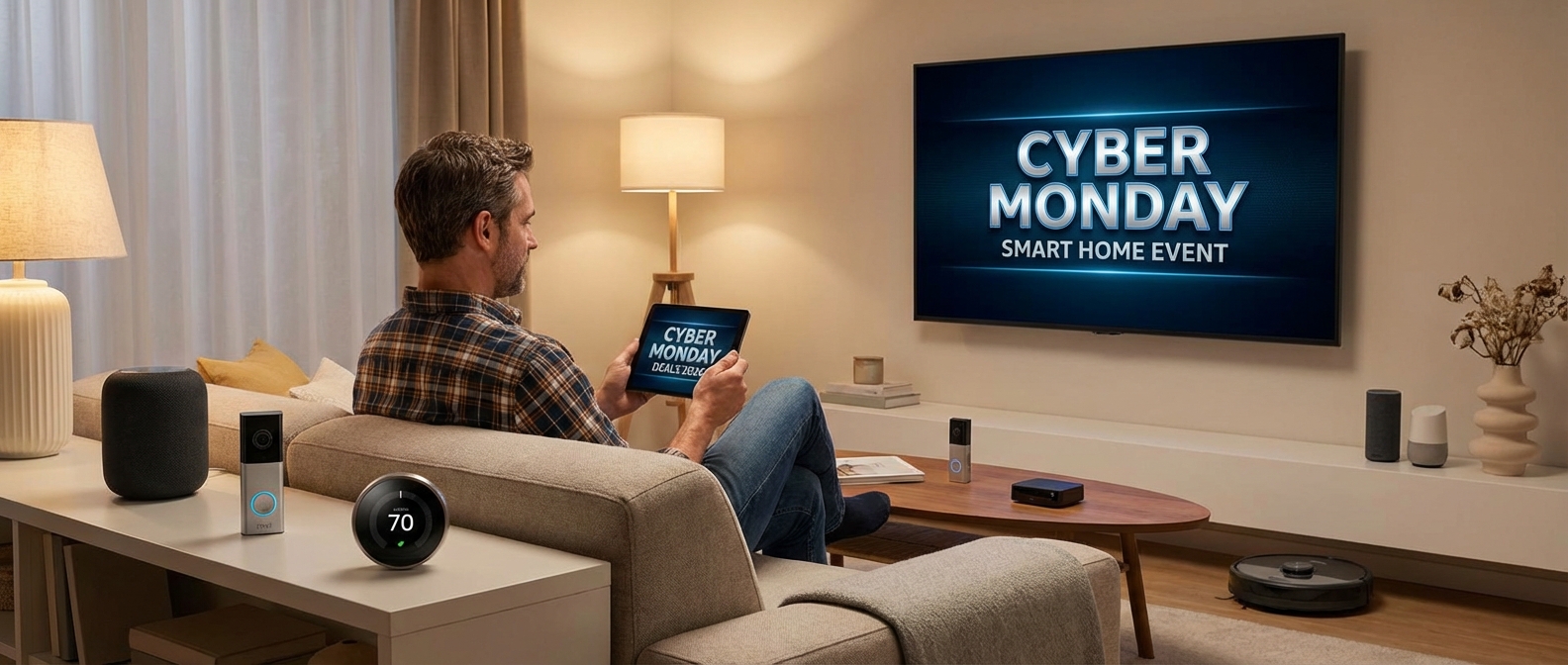
Why Smart Dads Start Tracking Cyber Monday 2026 Now
Smart dads know that securing the best cyber monday smart home deals dad wants isn't about luck; it's about data. By tracking prices immediately after the holiday reset and analyzing CES 2026 trends, you identify baseline costs before retailers artificially inflate them. Early planning ensures hardware compatibility within your chosen smart home ecosystem and prevents costly impulse buys.
The "Smart Dad" Roadmap: January to November
It is January 3. While the average consumer is recovering from New Year's, the strategic father is already looking at Las Vegas. The Consumer Electronics Show (CES) is currently setting the stage for the next twelve months of hardware. The devices announced this week—new Matter-compliant hubs, AI-integrated security cameras, and next-gen robo-vacuums—are the exact items you will target in November.
To dominate the sales later, you must establish the "True MSRP" now. Retailers notoriously creep prices upward starting in September to make November discounts appear deeper than they are.
The 2026 Smart Home Deal Lifecycle
| Phase | Timeframe | Retailer Tactic | The Smart Dad Strategy |
|---|---|---|---|
| The Baseline | Jan - Mar 2026 | Standard pricing post-holiday. | Record the "street price" of desired tech. |
| The Refresh | Apr - Aug 2026 | New models from CES hit shelves. | Watch for clearance on 2025 models. |
| The Inflation | Sept - Oct 2026 | Prices creep up to original MSRP. | Do not buy. Ignore "early bird" hype. |
| The Payoff | Nov 2026 | "Massive" discounts advertised. | Execute buy orders only if below Baseline. |
Ecosystem Compatibility First
A 50% discount is financially irresponsible if the device breaks your automation protocols. Before you even look at a price tag, you must audit your current setup. The fragmentation of smart home standards is improving, but it is not solved.
- Matter Protocol: Verify if the new 2026 gear requires a Thread border router you don't own yet.
- Walled Gardens: Ensure that "deal" isn't exclusive to an ecosystem you don't use (e.g., a heavily discounted Ring doorbell is useless if you are strictly a HomeKit Secure Video household).
- Bandwidth Overhead: Calculate if your router can handle twenty new IP addresses.
For a broader perspective on integrating tech into modern fatherhood this year, consult The Smart Dad's 2026 guide.
Executing a Price Tracking Strategy
You cannot rely on memory. You need a rigorous price tracking strategy. Automated tools are your best defense against dynamic pricing algorithms designed to maximize retailer margins.
- Browser Extensions: Install trackers like Keepa or CamelCamelCamel immediately. You need historical data charts, not just current spot prices.
- Price Alerts: Set alerts for 15% below the current January price. This filters out the noise of minor fluctuations.
- Spreadsheet Tracking: Maintain a simple watchlist of specific SKUs. Note the lowest price seen during Prime Day or mid-year sales to serve as your benchmark for Cyber Monday.
By starting today, you shift the power dynamic. You aren't a consumer reacting to a banner ad; you are an informed buyer executing a ten-month plan.
The 2026 Smart Home Wishlist: Top Gear to Watch
The 2026 Smart Home Wishlist: Top Gear to Watch
The 2026 smart home landscape is defined by local generative AI integration and full Matter 2.0 interoperability, moving beyond simple automation to genuine anticipation. For Cyber Monday, savvy dads should target high-ticket infrastructure upgrades—specifically predictive climate control, autonomous cleaning robots, and proactive security ecosystems—where historical data suggests price drops of 35-50%, offering the highest ROI for modernizing the family home.
High-Ticket Targets: A Strategic Overview
Don't waste Cyber Monday refreshing pages for smart plugs. The real value lies in hardware that fundamentally changes how your home operates. Focus your budget on these three "Dad Archetype" categories.
| Category | Target Tech Standard (2026) | Why It Matters | Expected Discount Range |
|---|---|---|---|
| Security | Edge AI & 4K Continuous Recording | Zero cloud lag; privacy-first facial recognition. | 30% - 45% |
| Climate | Matter over Thread & Grid-Interactive | Millisecond response times; utility bill reduction. | 25% - 40% |
| Cleaning | LiDAR + Object Recognition AI | Avoids toys/cables; self-refilling water lines. | 40% - 50% |
1. The Protector: Proactive Perimeter Defense
The days of grainy footage and delayed notifications are over. In 2026, smart security cameras have shifted from reactive recording to proactive deterrence. Look for systems utilizing "Edge AI." This processes data locally on the camera rather than the cloud, ensuring alerts for unrecognized faces or vehicles are instantaneous, even if the internet goes down.
- Key Feature to Watch: Color Night Vision with active deterrence (strobes/sirens) triggered by specific behavioral analytics.
- Top Pick Criteria: Ensure the ecosystem supports 24/7 continuous recording to a local NVR or high-capacity SD card. Subscription fatigue is real; pay once for hardware that works forever.
2. The Efficiency Expert: Predictive Climate Control
Old programmable thermostats are obsolete. Smart thermostats 2026 models utilize multi-room presence sensing and connect directly to your local weather station data. They don't just react to the temperature changing; they pre-cool or pre-heat the house based on solar gain forecasts and your family’s GPS location.
This year, prioritize units that support Matter over Thread. This mesh networking standard ensures your thermostat talks directly to your smart blinds and fans without clogging your Wi-Fi bandwidth. A truly connected system can lower energy bills by 20-30%, paying for itself within two seasons. For a comprehensive look at setting up a modern, efficient household ecosystem, refer to The Smart Dad Guide 2026.
3. The Delegator: Autonomous Floor Maintenance
If you are still rescuing your vacuum from a tangle of charging cables, it is time to upgrade. The latest robot vacuums with AI have solved the navigation problem. Using advanced camera vision and on-board neural processing, these units identify and avoid specific hazards—from LEGO bricks to pet waste—with near-perfect accuracy.
What to look for on Cyber Monday:
- The "All-in-One" Dock: Look for docks that wash the mop pads with hot water, dry them with warm air, refill the robot's water tank, and empty the dustbin.
- Plumbing Integration: High-end models in 2026 now offer kits to hook directly into your home's water lines, removing the need to manually refill tanks entirely.
- Carpet Detection: Ensure the mop pads physically lift (or detach) when the robot hits a rug. Wet carpets are a rookie mistake.
Home Security & Surveillance: Protecting the Castle
Home Security & Surveillance: Protecting the Castle
Smart home security in 2026 is no longer about who has the clearest lens; it is about who owns the footage. For the discerning father, the priority has shifted from cloud convenience to data sovereignty. You need systems that integrate seamlessly with your home network without bleeding your wallet through monthly SaaS fees.
Local storage security cameras are the headline act for this year's Cyber Monday watchlists. These devices process AI events—like distinguishing between a stray cat and a porch pirate—directly on the chip, ensuring your family's privacy remains intact. We are tracking significant discounts on ecosystems that prioritize Network Attached Storage (NAS) recording over cloud uploads.
Top Surveillance Ecosystems to Watch
Below are the expected frontrunners for Cyber Monday 2026, focusing on high-fidelity recording and zero mandatory fees.
| Brand / Series | Model Focus (2026) | Storage Method | Subscription? | Best For |
|---|---|---|---|---|
| Ubiquiti | UniFi Protect G5 AI | Local Console / NVR | No | Prosumers wanting total control. |
| Eufy | EufyCam 4 Pro Solar | HomeBase 4 (16TB max) | No | Easy, wireless setup with massive local storage. |
| Reolink | CX810 PoE | MicroSD / NAS / NVR | No | Budget-friendly 4K night vision. |
| Ring | Battery Doorbell Pro 3 | Edge Processing / SD | Optional | Those deeply entrenched in the Alexa ecosystem. |
The Wireless Frontier: Ubiquiti & Eufy
If you have run Ethernet cable through your walls, Ubiquiti's UniFi Protect line remains the gold standard. Look for bundles including the Dream Machine Pro SE; these rarely drop in price, so any discount above 10% is a "buy now" signal. Their interface offers the granular control that defines the tech-savvy parent, a core philosophy detailed in The Smart Dad : Le Blog de Référence pour le Papa Moderne en 2026.
For wireless flexibility, Eufy has matured significantly this year. The EufyCam 4 Pro integrates solar panels directly into the housing with improved efficiency, meaning you likely won't climb a ladder to recharge them until 2027. Their HomeBase 4 now supports generic SSD expansion, making it a viable mini-NVR for dads who refuse to pay for cloud storage.
The Front Line: Video Doorbells
The doorbell is your first line of defense. Avoid the trap of cheap hardware that holds your features ransom behind a paywall. Video doorbells no subscription models are essential for a cost-effective smart home.
- Reolink Video Doorbell PoE: Offers instant response times and integrates flawlessly with Home Assistant and Synology Surveillance Station.
- Ring Pro (Late 2026 Model): Rumors suggest the upcoming Ring Pro will finally offer a local storage option via an SD card slot or a local hub bridge, responding to years of consumer pressure. Keep an eye on this if you are already invested in Echo devices.
- UniFi G4 Doorbell Pro: Still the king of 24/7 recording, provided you have the wiring to support it.
Prioritize hardware that supports ONVIF and RTSP protocols. This ensures that even if the manufacturer shuts down their servers ten years from now, your cameras will still record to your local NAS. Secure the perimeter, keep your data local, and own your infrastructure.
Energy Efficiency & Climate Control: The ROI Play
Energy Efficiency & Climate Control: The ROI Play
Smart home energy devices offer the highest Return on Investment (ROI) of any tech upgrade by actively reducing utility waste through automation and data analysis. Prioritizing smart thermostat savings via occupancy detection and automating thermal regulation with smart blinds can cut HVAC costs by up to 23% annually. This section details the specific hardware that turns your home into a self-regulating asset.
You aren't just buying gadgets; you are plugging leaks in your wallet. The modern dad knows that the sticker price matters less than the operational cost. By integrating climate control with real-time monitoring, you automate savings and free up cash flow.
Thermostats: The Brains of the Operation
The battle for the wall continues between Ecobee and Google Nest. The 2026 iterations have moved beyond simple scheduling; they now leverage local weather data and AI-driven predictive heating to adjust temperatures before you even feel a draft.
- Ecobee Smart Thermostat Premium (2026 Edition): Features built-in air quality monitoring and pairs with remote sensors to balance hot/cold spots in larger homes.
- Nest Learning Thermostat (Gen 5): Utilizes advanced learning algorithms that require zero programming, adapting to your routine within a week.
Both ecosystems emphasize smart thermostat savings by syncing with time-of-use electricity rates, ensuring you never cool the house during peak pricing windows.
Smart Blinds: The Silent Insulators
Automated window treatments are often overlooked, yet they are critical for preventing heat gain in summer and heat loss in winter. Brands like Lutron and Eve have released retrofittable motors this year that install in seconds. Program them to close automatically during the hottest part of the day to drastically reduce the load on your AC unit.
Energy Monitoring: Hunt Down Vampire Loads
You can't manage what you don't measure. Energy monitoring smart plugs from brands like Kasa or Eve allow you to identify devices that drain power even when "off." Connect your gaming rig, dehumidifier, or garage freezer to these plugs to visualize exact consumption on your phone and cut the dead weight.
Comparison: Top Energy Efficiency Deals to Watch
| Device Category | Top Pick (2026) | Key Feature | Est. Annual Savings | ROI Timeframe |
|---|---|---|---|---|
| Thermostat | Ecobee Premium | Occupancy Sensing | 12-23% (HVAC) | < 18 Months |
| Smart Blinds | Eve MotionBlinds | Adaptive Shading | 10-15% (Cooling) | 2-3 Years |
| Smart Plugs | Kasa Matter Plug | Real-time Monitoring | $50-100 | < 6 Months |
For a broader strategy on upgrading your household tech this year, check our comprehensive The Smart Dad 2026 Guide. These tools don't just add convenience; they fundamentally change how your home consumes resources. Keep a close eye on these specific models as you build your watchlist.
The Ultimate Dad Cave: Lighting & Entertainment
The Ultimate Dad Cave: Lighting & Entertainment
Building a truly immersive sanctuary requires more than just an 8K OLED panel. By 2026, the gold standard for a Dad Cave is reactive lighting that extends the action beyond the bezel. A high-quality smart lighting sync box analyzes the video signal in real-time, flashing explosions or subtle sunsets onto your walls to envelop the room in the on-screen atmosphere.
Philips Hue vs. Govee: The 2026 Showdown
Two giants dominate the reactive lighting space this year. Philips Hue continues to offer the premium, seamless experience with its HDMI Sync Box 8K, while Govee provides a compelling, budget-friendly alternative that has drastically improved its latency issues from previous years.
Comparison of Top 2026 Sync Models
| Feature | Philips Hue Play HDMI Sync Box 8K | Govee AI Gaming Sync Box Kit 2 |
|---|---|---|
| Sync Method | Direct HDMI Pass-through | HDMI & AI Camera Hybrid |
| Resolution Support | 8K @ 60Hz / 4K @ 120Hz | 8K @ 60Hz |
| Color Accuracy | 10/10 (Cinema Grade) | 8/10 (Vivid/Saturated) |
| Setup Difficulty | Medium (Requires Hue Bridge) | Easy (Wi-Fi Direct) |
| Price Tier | Premium ($$$) | Budget-Friendly ($$) |
Mastering Home Theater Automation
Hardware is only half the battle; control is the other. You shouldn't need to open an app to start movie night. True home theater automation integrates these lights with your broader smart home ecosystem via Matter.
- Scene Stacking: Configure a "Game Time" scene that turns off overhead lights, sets the thermostat to 68°F (gaming computers generate heat), and activates the sync box.
- Voice Command: A simple "Hey Google, activate Dad Cave" should trigger the entire sequence.
- Audio Sync: For 2026, look for integration with Spotify or Apple Music, allowing your lights to pulse to the beat when the screen is off.
For a deeper dive into balancing tech with parenting duties, refer to our foundational piece: The Smart Dad : Le Blog de Référence pour le Papa Moderne en 2026.
Prioritize kits that support HDMI 2.1 if you are gaming on a PS5 Pro or Xbox Series X (2026 refresh). Older sync boxes will bottleneck your frame rates, negating the benefits of your expensive console. Watch for bundles this Cyber Monday that include the gradient lightstrip and the sync box together, as buying them separately often carries a 20% markup.
Lawn & Maintenance: Reclaiming Your Weekend
Lawn & Maintenance: Reclaiming Your Weekend
Automating yard work provides the highest Return on Time Invested (ROTI) for fathers in 2026. By deploying a wire-free robot lawn mower and a predictive smart sprinkler controller, you can reclaim approximately 150 hours of labor annually. This section outlines the specific outdoor automation hardware to add to your 2026 watchlist, prioritizing reliability and true autonomy over novelty features.
The Death of the Perimeter Wire
If you are still burying copper wire, you are doing it wrong. The standard for 2026 is vision-based navigation combined with RTK-GPS. The newest wire-free robot lawn mower models no longer require line-of-sight to the sky for 100% of the mowing cycle, solving the "dead zone" issues caused by large oak trees or tall fence lines that plagued previous generations.
Top-tier manufacturers have shifted focus from raw power to obstacle avoidance and edge trimming. Look for deals on units that utilize LiDAR or stereo-vision cameras. These sensors allow the mower to distinguish between a patch of tall grass and a forgotton toy truck, preventing costly accidents.
2026 Robot Mower Watchlist: Specs to Target
| Feature Class | Technology Standard | Why It Matters | Target Price (Deal) |
|---|---|---|---|
| Navigation | RTK + Vision / LiDAR | No digging wires; works under tree cover. | $1,200 - $1,800 |
| Slope | AWD (All-Wheel Drive) | Handles grades up to 35° (70%) without slipping. | $2,000+ |
| Cut System | Dual-Disc / Razor | Finer mulch capability; quieter operation. | N/A (Standard) |
| App Control | 5G / Wi-Fi 7 | Instant status updates; "mow patterns" (stripes). | Included |
For a deeper dive into the philosophy of automating fatherhood tasks, refer to our foundational piece, The Smart Dad 2026 Guide.
Precision Irrigation
A green lawn shouldn't require a high water bill. A smart sprinkler controller is the brain your irrigation system lacks. The 2026 watchlist favorites integrate hyper-local weather data—not just from the airport ten miles away, but from neighborhood weather stations—to skip watering cycles before rain hits.
Key features to monitor for price drops this year:
- Flow Meter Integration: Detects leaks immediately and shuts off the zone, preventing flooded basements or eroded landscapes.
- EPA WaterSense Certification: Often qualifies you for utility rebates that stack with Cyber Monday discounts.
- Soil Moisture Sensors: Wireless probes that tell the controller exactly when the root zone is dry.
Stop trading your Saturdays for yard maintenance. Set the alerts for these devices now, and be ready to execute when the prices drop later this year.
Matter & AI: The Tech Standards You Must Know in 2026
Matter & AI: The Tech Standards You Must Know in 2026
In 2026, the Matter smart home standard is no longer optional; it is the absolute baseline for interoperability across Apple, Google, and Amazon ecosystems. Combined with the hardware requirements for new Generative AI assistants, buying legacy devices without Matter support or local processing capabilities guarantees obsolescence. To secure a future proof smart home, you must prioritize Thread border routers and devices equipped with Neural Processing Units (NPUs) capable of handling on-device LLMs.
The Death of "Walled Gardens"
Buying non-Matter devices this year is a mistake. Period.
The era of checking boxes for "Works with Alexa" or "HomeKit Compatible" is over. Matter has unified the infrastructure. If a smart lock, bulb, or thermostat does not carry the Matter logo, it is effectively e-waste before you even unbox it. Matter over Thread creates a self-healing mesh network that is faster and more reliable than Wi-Fi, eliminating the "device offline" headaches that plague older setups.
For the modern father, this means efficiency. As detailed in our foundational post, The Smart Dad : Le Blog de Référence pour le Papa Moderne en 2026, your tech stack should reduce friction in your life, not add to it. Matter ensures your hardware works regardless of whether you switch from iPhone to Android next year.
Generative AI: The New Hardware Reality
The biggest shift in 2026 isn't the connectivity; it's the intelligence. AI home automation has moved beyond simple command-and-response scripts ("Turn on the lights") to context-aware Generative AI.
Amazon’s Alexa LLM and Apple’s revamped Siri now process complex, multi-step requests naturally. However, this intelligence requires local compute power. The cloud-dependent smart speakers of 2023 cannot handle the latency or privacy requirements of 2026’s AI agents.
Why you need AI-ready hardware:
- Latency: AI processing happens on-device (Edge AI) for instant responses.
- Privacy: Voice data for Generative AI is processed locally, not sent to the cloud.
- Context: New sensors distinguish between a dog barking and a baby crying, triggering different automated routines.
Cheat Sheet: Legacy vs. 2026 Standards
When scanning Cyber Monday deals, use this table to filter out outdated tech.
| Feature | Legacy Tech (Avoid) | 2026 Standard (Buy) |
|---|---|---|
| Connectivity | Wi-Fi only / Single Ecosystem (Zigbee) | Matter over Thread |
| Voice Processing | 100% Cloud-based | Hybrid (On-device NPU + Cloud) |
| Automation Logic | If/Then Scripts | Generative Intent / Predictive |
| Video Doorbells | Motion triggers only | Facial Recognition & Package AI |
| Hub Requirement | Proprietary Bridge per brand | Single Thread Border Router |
The Bottom Line: Do not be tempted by deep discounts on "Gen 4" or "Gen 5" speakers that lack neural processors. To future-proof your setup, look for "Edge AI" capabilities and Matter certification on every box.
Analyzing Past Trends: What is a 'Good' Price?
A "good" price generally represents a discount of at least 30% off MSRP for established hardware, or matching the previous price history lowest recorded during Prime Day. For flagship robot vacuums, aim for 45% off, while premium security cameras and smart locks typically cap at 20-25% discounts. Anything less is often a standard rotation sale, not a true Cyber Monday event.
Deciphering the Data: 2024-2025 Retrospective
Historical data serves as our best indicator for 2026 pricing. Analyzing the last two years reveals distinct smart home discount trends that separate genuine bargains from marketing fluff. Hardware cycles dictate these trends. You will consistently see the deepest cuts on competitive "ecosystem entry" tech like smart speakers and robot vacuums. Manufacturers subsidize these prices to secure your long-term loyalty.
Conversely, infrastructure technology—such as hardwired smart locks or premium thermostats—rarely sees massive price slashes. These are one-time purchases with lower turnover rates. Knowing when to buy smart electronics requires distinguishing between clearance events (dumping old stock) and genuine flagship discounts. We discuss the philosophy of selecting the right ecosystem in The Smart Dad : Le Blog de Référence pour le Papa Moderne en 2026, but purely regarding financials, you must ignore the "percentage off" sticker and verify the final dollar amount against the 12-month average.
2026 Target Buy Prices
Use this table to set your "Buy Now" triggers. If a deal hits the "Target Discount," pull the trigger immediately.
| Category | Typical Cyber Week Drop (2024-2025 Data) | Target Buy Price (% Off MSRP) | Dad Notes |
|---|---|---|---|
| Robot Vacuums | 35% - 50% | 45%+ | Older flagships often drop 50%. Look for auto-empty docks. |
| Smart Locks | 15% - 25% | 25% | Rarely drops below 20%. A 30% cut is an instant buy. |
| Mesh Wi-Fi 6E/7 | 20% - 35% | 30% | 3-pack bundles offer the best value per unit. |
| Security Cameras | 20% - 40% | 35% | Battery models drop more than wired floodlight cams. |
| Smart Thermostats | 10% - 20% | 20% | Discounts are slim. Check for local utility rebates instead. |
| Smart Lighting | 15% - 30% | 30% (Bundles) | Single bulb discounts are weak. Buy "Starter Kits" for value. |
Red Flags to Avoid
Not every price drop is a deal. Watch out for these common retailer tactics:
- The "Inflated MSRP": Retailers often raise the list price in October to make the November discount look larger. Always check a tracker to confirm the price history lowest.
- Derivate Models: Big box stores often sell specific model numbers (e.g., TV Model X-100B) made with cheaper components specifically for holiday sales. Stick to the core model numbers reviewed by experts.
- Bundle Bloat: Avoid bundles packed with accessories you will never use just to justify a higher price tag.
The 'Dad-Proof' Buying Strategy for Cyber Monday
The "Dad-Proof" Buying Strategy for Cyber Monday
To dominate Cyber Monday 2026, you need a disciplined three-pronged approach: rigorous pre-purchase price tracking, prioritizing high-WAF (Wife Acceptance Factor) utility, and leveraging ecosystem bundles. Don't buy on impulse. Instead, set automated alerts now and focus on packages that solve specific household friction points rather than just adding flashy tech.
Mastering the WAF (Wife Acceptance Factor)
The difference between a gadget gathering dust and a beloved household utility is the WAF smart home metric. Approval depends on utility, not specs. Your partner likely does not care about Matter over Thread support; she cares that the hallway lights turn on automatically when she’s carrying groceries.
When pitching a Cyber Monday purchase, frame it as a solution to a shared problem.
- Don't say: "This sensor has a 5-year battery life and sub-second latency."
- Do say: "This sensor ensures the thermostat turns down when the kids leave for school, saving us 15% on heating bills."
For a deeper dive into balancing modern parenting with technology, consult The Smart Dad Guide 2026. The goal is to integrate tech that simplifies parenting duties, not complicates them.
Why Bundling Beats Single Items
Retailers aggressively discount smart home bundles to lock you into their ecosystem. They know that once you have a Ring doorbell, you are unlikely to buy a Google Nest camera for the backyard. Consequently, "Starter Kits" or "Whole Home" packages often offer significantly higher percentage savings than buying components individually.
Always check the "Frequently Bought Together" or "Bundle and Save" options before checkout.
| Bundle Type | Individual Components | Est. Standalone Cost | Est. Bundle Deal | Potential Savings |
|---|---|---|---|---|
| Security Starter | Video Doorbell + Chime + Outdoor Cam | $380 | $249 | 34% |
| Climate Control | Smart Thermostat + 3 Room Sensors | $320 | $229 | 28% |
| Lighting Entry | Hub + 4 Color Bulbs + Dimmer Switch | $260 | $179 | 31% |
| Mesh Wi-Fi | Main Router + 2 Satellites | $450 | $349 | 22% |
Automating the Hunt: Price Alert Tools
Retailers often inflate base prices in October to make November discounts appear deeper than they are. To avoid "fake" deals, you must rely on historical data rather than the strikethrough price on the product page.
Use price alert tools to remove the emotion from buying. We recommend CamelCamelCamel (for Amazon) or Keepa. These tools track price history charts, allowing you to see if that "lowest price ever" claim is actually true.
How to set up a bulletproof alert system:
- Identify the Product: Locate the specific URL of the smart device you want.
- Analyze History: Paste the URL into the tracker. Look at the "Lowest" price column. Is the current deal close to that historical low?
- Set the Trap: Input your "Target Price" (aim for 10-15% below the current average).
- Wait: When the price drops on Cyber Monday, you receive an instant email. Buy immediately.
This method prevents doom-scrolling and ensures you only spend money when the value is mathematically verified.
Avoiding the 'Zombie Device' Trap
Avoiding the "Zombie Device" Trap
A "Zombie Device" is smart home hardware that functions perfectly when purchased but becomes useless electronic waste once the manufacturer shuts down its cloud servers or ceases app updates. To avoid this trap, you must prioritize hardware that supports universal standards like Matter or local control protocols like Zigbee/Z-Wave, rather than proprietary Wi-Fi devices dependent on a specific, obscure app.
Cyber Monday is notorious for flooding the market with white-label gadgets at rock-bottom prices. While a $4 smart bulb is tempting, the long-term cost often outweighs the upfront savings. We issued a cheap smart devices warning last year, and the situation has only escalated in 2026. When a fly-by-night brand disappears, your automation breaks. Even worse, unpatched firmware creates significant smart home security risks, turning your connected toaster into a backdoor for network intruders.
The True Cost of "Cheap"
High-quality gear maintains value through reliability and software support. As discussed in our reference guide for the modern dad in 2026, a smart home is an ecosystem, not a collection of disposable toys.
Compare the lifecycle of a premium device versus a bargain bin alternative:
| Feature | Premium Device (e.g., Philips Hue, Lutron) | Zombie Candidate (Generic No-Name) |
|---|---|---|
| Connectivity | Matter, Zigbee, Thread (Local Control) | Wi-Fi only (Cloud Dependent) |
| App Reliance | Works with HomeKit, Google, Alexa, HA | Requires "SmartLife" clone or proprietary app |
| Security | Regular firmware patches & 2FA | High Risk: No updates, hardcoded passwords |
| Longevity | 5-10+ years of support | 6-18 months until app is abandoned |
| Resale Value | Retains 40-60% value | $0 (E-waste) |
Red Flags to Watch For
Before hitting "Buy Now" on that too-good-to-be-true deal, check for these warning signs. If you see them, walk away.
- Proprietary App Requirement: If the box says "Download App X to control" and doesn't mention Matter, HomeKit, or a major ecosystem, it relies on a specific server that may not exist in 2027.
- No Website Presence: If the brand has no dedicated support website and only exists as a marketplace seller, support will be non-existent.
- Cloud-Only Operation: Devices that cannot function without an active internet connection are ticking time bombs.
- Generic Packaging: Boxes that reuse stock photos without clear branding often indicate a "drop-shipped" item with zero quality control.
Invest in infrastructure. A dead smart plug isn't just an annoyance; it's a wasted Saturday afternoon troubleshooting a problem you paid to import into your home. Stick to the brands that have committed to the Matter standard this year.
Conclusion: Build Your 2026 Watchlist Today
Preparation is the only difference between an impulse buy and a strategic upgrade. While November feels distant on this January morning, the best smart home ecosystems are built through careful planning, not frantic clicking on Cyber Monday. Start auditing your home network and device compatibility now to ensure your 2026 tech deals actually integrate seamlessly when they arrive.
For a broader look at managing family tech and lifestyle this year, consult our guide for the modern dad.
Your 2026 Deal Strategy Timeline
Use this schedule to prepare for the major sales events later this year.
| Timeline | Action Item | Goal |
|---|---|---|
| Q1 (Jan - Mar) | Network Audit | Upgrade router mesh systems if coverage is weak. |
| Q2 (Apr - Jun) | Ecosystem Check | Decide between Matter, HomeKit, or Google Home focus. |
| Q3 (Jul - Sep) | Price Tracking | Use tools like CamelCamelCamel to set price baselines. |
| Q4 (Oct - Nov) | Execution | Secure specific SKUs on Black Friday/Cyber Monday. |
Bookmark this page. We update this guide continuously as manufacturers announce new hardware and retailers leak their holiday circulars.
Don't rely on luck. Sign up for The Smart Dad smart home newsletter immediately. We send real-time alerts when flagship devices hit their historical low prices, ensuring you never miss the window on a critical upgrade. By the time the general public sees the discount, you will have already checked out.